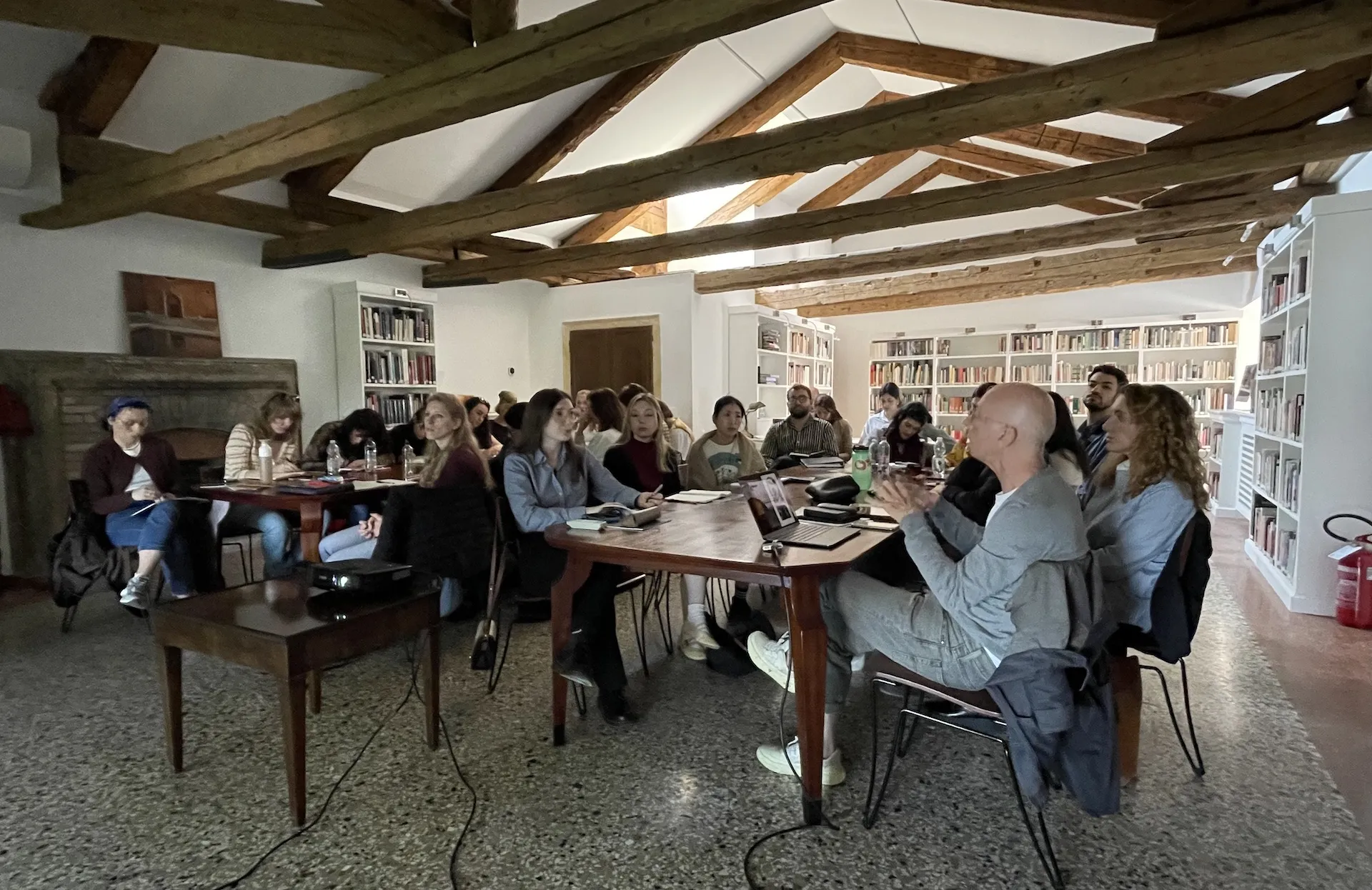
Graduate Seminars
2026 Seminars and Workshops
Early Modern Sources for Art History in Venice - Graduate intensive course
June 29-July 3, 2026
Columbia University, Casa Muraro/ Università Ca’ Foscari Venezia
Organization committee: Prof. Giovanni Maria Fara (Università Ca’ Foscari Venezia), Prof. Valentina Sapienza (Università Ca’ Foscari Venezia), Prof. Diane Bodart (Columbia University), Prof. Eleonora Pistis (Columbia University)
- Course description
This week-long course, co-organized by Columbia University–Casa Muraro, and the University Ca’Foscari Venezia, offers art history graduate students a rare opportunity to explore early modern sources for art history available in Venetian institutions, such as archives, libraries, museums, conservation laboratories. Students will learn how to navigate these institutions’ complex catalogs and systems of indexation and receive methodological guidance on researching primary sources.
Venice is not only home to a world-famous artistic heritage, much of which is preserved in situ, but also to extraordinary collections of archival documents and ancient manuscripts and printed books. The city houses one of Italy’s most important archives for the early modern period, the Archivio di Stato di Venezia, an indispensable resource for art historians wishing to study the Venetian context of this period, alongside the valuable resources of the Archivio Storico del Patriarcato. The Biblioteca Marciana, one of Italy’s oldest libraries, and the Biblioteca del Museo Correr, founded at the request of the patrician Teodoro Correr in 1830, preserve an invaluable heritage for the history of books, the history of Venice, and humanistic culture in general. The Cini Foundation, with its Manica Lunga library and ancient collections, is an essential place for art historical research in Venice. Since the creation of the Conservation and Scientific Laboratories of the Gallerie dell'Accademia di Venezia in the 1960s, Venice has also hosted one of the most important archives of technical images and conservation files of early modern works of art (Laboratori della Misericordia). Therefore, Venice offers an ideal context to explore historical and material sources for art history, and to discuss the theories of the archive and their methodological implications for the field.
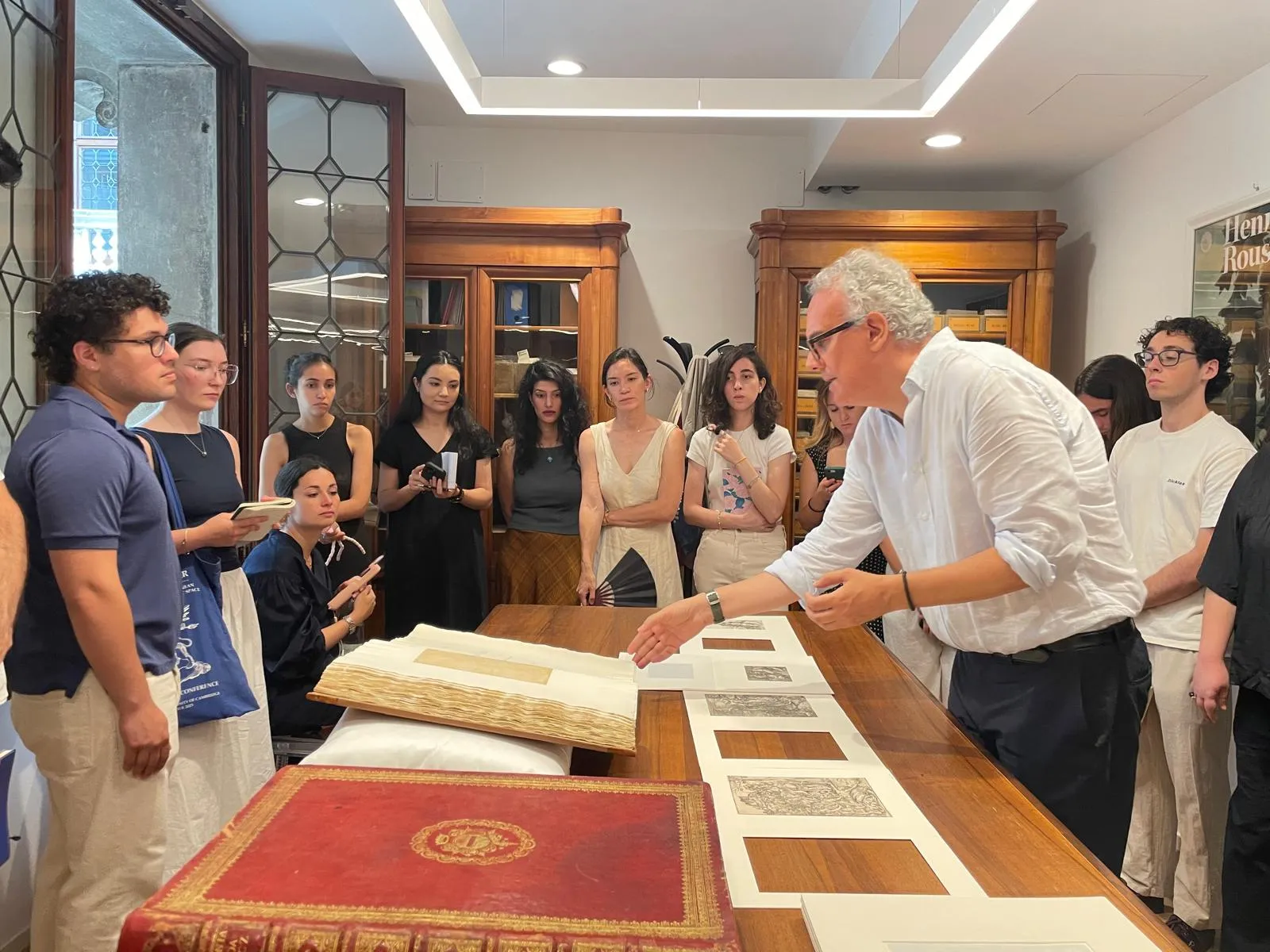
Throughout the week, students will attend workshops at major Venetian institutions, including the Fondazione Cini, the Archivio di Stato di Venezia, the Archivio Patriarcale, the Biblioteca Marciana, the Biblioteca del Museo Correr, the Laboratori della Misericordia, and the Save Venice Archive. They will learn about the institutions’ collections and research potential from archivists, librarians, curators, and conservators. Students will also have the opportunity to discuss research experiences with scholars whose work is grounded in the collections of these institutions. Moreover, students will benefit from dialogue between American and Italian academics, as well as from collaborating with fellow students from Columbia University and Ca' Foscari University, which will broaden their methodological perspectives.
Students will have access to the research networks of Casa Muraro, the Columbia research center in Venice, and RIVE, Ca’ Foscari University's research center on the Venetian Renaissance visual culture. This course will benefit students with a research topic related to Venice who need to improve their ability to navigate its complex historical institution system, as well as students seeking future research topics. The course will foster new research, offering theoretical grounds and methodological resources to undertake it and providing access to guidance from a network of scholars, archivists, librarians and curators.
Schedule
Monday, June 29, 15-17 Università Ca’ Foscari
Introductions and discussion seminar
Tuesday, June 30
10-12 Scuola Vecchia della Misericordia: Conservation and Scientific Laboratories and Archives of the Gallerie dell’Accademia di Venezia.
Workshop: Examining ongoing conservation treatments; Researching technical images, conservation files, and photographic archive
Led by Diane Bodart (Columbia University) and Cleo Nisse (University of Groningen)
With Francesca Bartolomeoli (conservator, Laboratori di restauro e archivio restauri), Roberta Battaglia (curator, Gallerie dell’Accademia), Stefano Volpin (Director, Scientific Laboratory)
14-17 Save Venice’s conservation archive
Workshop: Researching technical images and conservation files
Led by Diane Bodart (Columbia University) and Cleo Nisse (University of Groningen)
With Melissa Conn (Director Venice Office, Save Venice), Gabriele Matino (Senior researcher, Save Venice)
Wednesday, July 01
10-12:30 Archivio di Stato di Venezia
Workshop: Sources for Art History in the Archivio di Stato di Venezia
Led by Valentina Sapienza (Università Ca’ Foscari) and Sara Olivieri (Archivio di
Stato di Treviso). With Andrea Erboso (Director. ASVe), Paola Benussi (Archivist, ASVe),
Salvatore Alongi (ASVe)
14-17 Archivio di Stato di Venezia
Workshop: History, art history, and material culture research at Archivio di Stato di Venezia
Led by Valentina Sapienza (Università Ca’ Foscari and Sara Olivieri (Archivio di Stato di
Treviso). With Federico Barbierato (Università di Verona), Maria Adank (Università di Verona)
Thursday, July 02
10-13 Biblioteca Nazionale Marciana
Workshop: Manuscript and printed sources in the Biblioteca Marciana
Led by Eleonora Pistis (Columbia University), Giovanni Maria Fara (Ca’Foscari), Anna Bernante (Ca’ Foscari) With Monica Donaglio (Archivist, BNM), Alessia Giachery (Curator, manuscript
collection, BNM)
16-18 Biblioteca del Museo Correr
Workshop: Manuscript and printed sources in the Biblioteca del Museo Correr
Led by Valentina Sapienza and Sara Olivieri. With Monica Viero (Director, BMC), Andrea
Bellieni (Curator, BMC), and Anna Bellavitis (Université de Rouen Normandie)
Friday, July 03
10-12:00 Archivio Storico del Patriarcato di Venezia
Led by Valentina Sapienza (Università Ca’ Foscari) and Sara Olivieri (Archivio di Stato di Treviso). With don Diego Sartorelli (Director, ASPVe), and Laura LevanFno (Archivist, ASPVe)
14:30-17:30 Casa Muraro
Concluding seminar and reception
DOCTORAL WORKSHOP | 6–8 JULY 2026
Preserving and/or Exhibiting Historical Graffiti in Venice
Organized by Francesca Alberti (National Gallery London / University of Tours, CESR) and
Diane Bodart (Columbia University)
Partner Institutions: Columbia University – Casa Muraro, University of Tours, ANR Carracci ConservArt
This research workshop is part of the ANR Carracci ConservArt project
(https://www.efrome.it/p/carracci-conservart).
It is the second event within an educational program associated with the publication of the graffiti and inscriptions discovered in the Gallery of the Carracci at the Palazzo Farnese in Rome. Its aim is to train doctoral students in highly relevant contemporary issues concerning the preservation, study, and publication of historical graffiti.
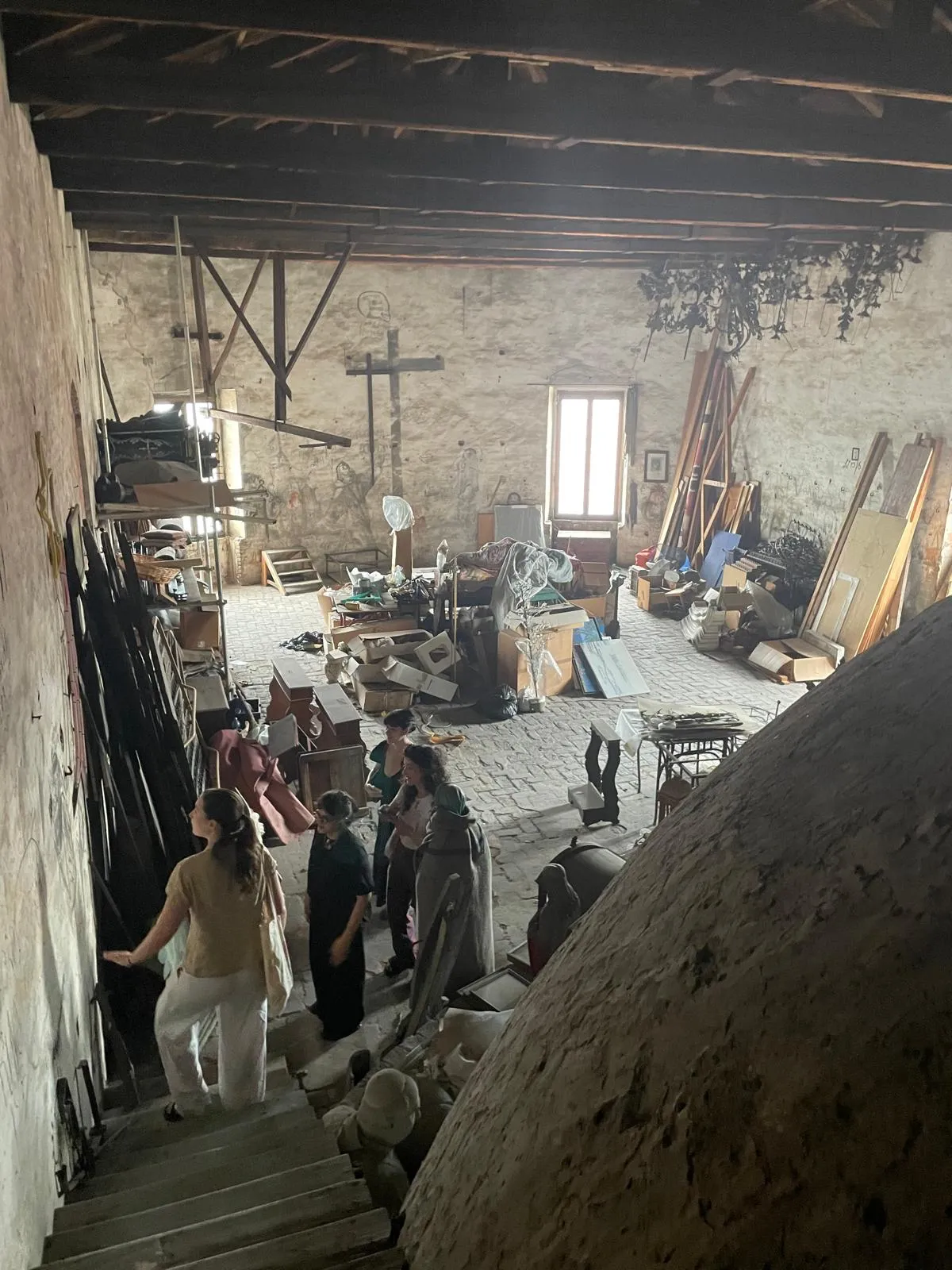
From 6 to 8 July 2026, the workshop will alternate visits, discussion and sharing of ongoing research projects. Open to doctoral students (or 2 year MA students) interested in the broad topic of graffiti, the workshop will feature contributions from various specialists, including historians, art historians, conservators, and paleographers. Following previous workshop, devoted to the city of Rome in 2025, this edition will focus on exploring different projects related to the preservation and enhancement of historical heritage of graffiti in Venice. For which reasons do historical graffiti become heritage? How can the everyday life or the afterlife of an artwork or an historical site, by visualized and narrated through graphic traces left by inhabitants, artists, users, or visitors?
Selected doctoral students will be provided with accommodation in Venice in shared double rooms, as well as reimbursement of travel expenses in Venice (vaporettp) and given free access to private visits organized at the Lazzaretto Nuovo, the Doge’s Palace, and additional venues. During the workshops, participants will also be invited to present their own research
through short presentations held at Casa Muraro, Venice. As places are limited, interested doctoral students are invited to write to:
providing two short paragraphs outlining the topic of their research, their interest in graffiti, and details of their current academic program 14 June 2026.
Selected doctoral students will receive a response before 17 June 2026.
2025 Seminars and Workshops
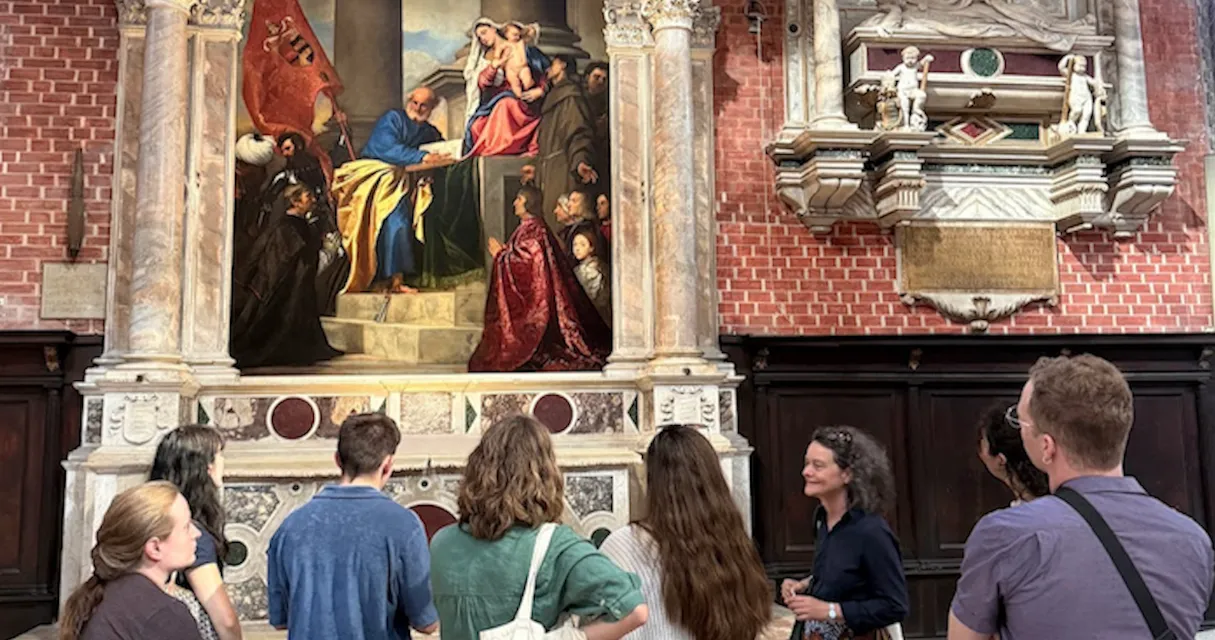
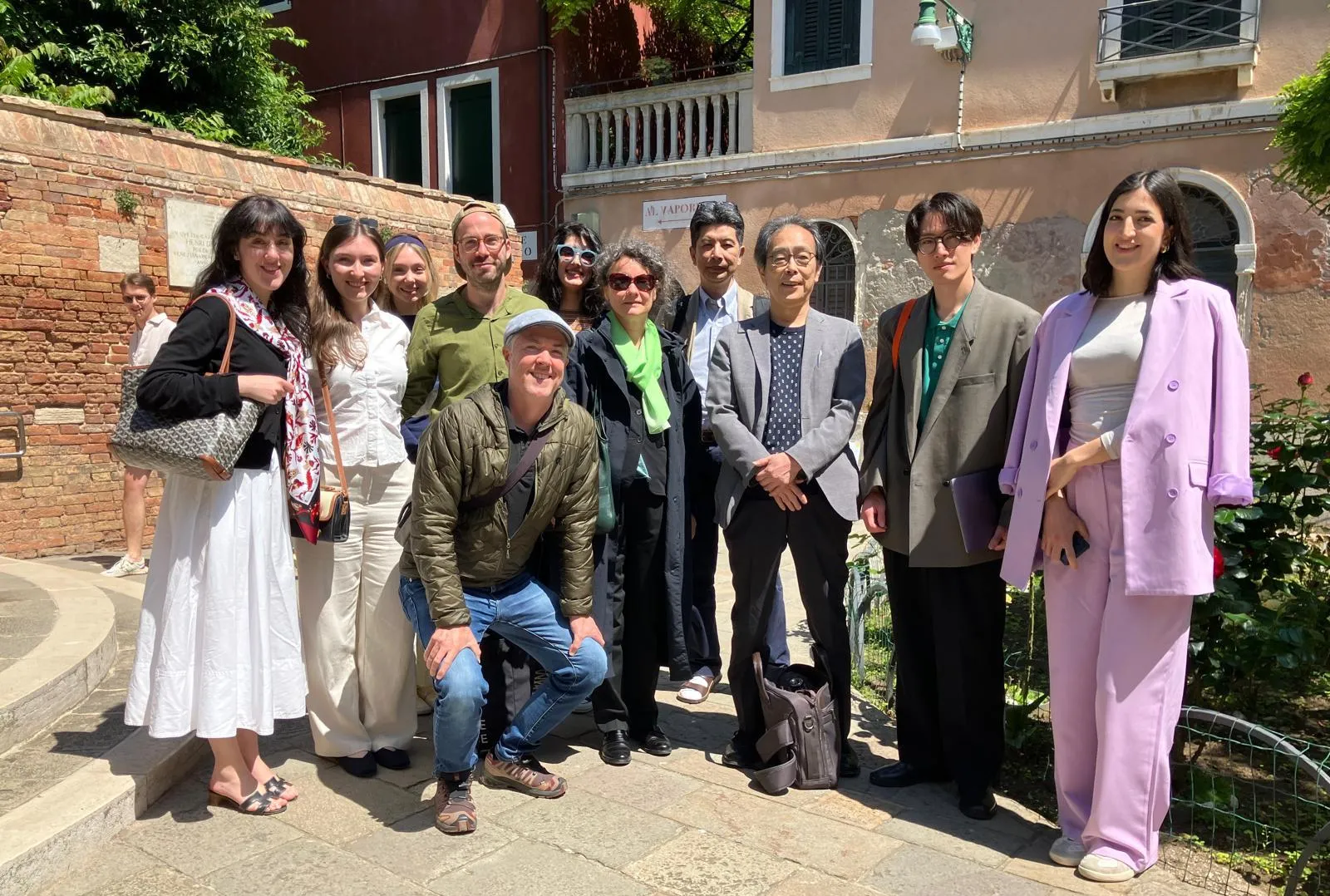
In May, Matthew McKelway and graduate students in Japanese art traveled to Venice, together with Diane Bodart, Nicola Suthor (Yale University), and the graduate students of their joint seminar Strokes and Lines, for the workshop The Materiality of the Brushstroke, co-organized by Casa Muraro and the Mary Griggs Burke Center for Japanese Art. Bringing together scholars of Venetian and Japanese painting, this four-day workshop explored the disruptive brushstroke as an artistic gesture through a comparative approach. An introductory panel opened the discussions with presentations by McKelway and esteemed Japanese professors Arata Shimao and Ryusuke Masuki. Participants then had the opportunity to explore major sixteenth-century Venetian paintings still preserved in churches and palaces, visit painting conservation sites with Save Venice, and examine the material structure of Titian’s brushstrokes with conservator Giulio Bono. They also discussed the process of oil painting with the contemporary artist Nicola Samorì and explored the dynamics of brush and ink in Japanese painting under Shimao’s guidance.
Diane Bodart launched the first Casa Muraro/Save Venice "Art and Conservation in Venice" Summer Graduate Seminar this year, which she co-taught with Cleo Nisse ('23 PhD), assistant professor at the University of Groningen. The seminar, generously funded by the Gladys Krieble Delmas Foundation, offered twenty-two graduate students from Columbia University, University of Groningen, and Università Ca' Foscari the unique opportunity to learn about conservation in Venice by visiting laboratories and on-site restoration projects. During study sessions at the Save Venice archives, students learned to research conservation files and interpret technical images, ultimately integrating this knowledge into their art historical tools of inquiry. The course situated the study of preservation and restoration at the intersection of current disciplinary interests, including materiality and mediality, technical art history, the ecology of art, decay and loss, care and repair. Students had the opportunity to discuss these topics with art conservators, scientists, and heritage professionals. Highlights of the program included visits to numerous conservation projects, including Tintoretto's Last Supper and The Israelites in the Desert at San Giorgio Maggiore, the stucco and fresco decorations on the ceiling of the Sala delle Quattro Porte in the Palazzo Ducale, Carpaccio's paintings at the Scuola Dalmata, and Bellini's Pietà at the Scuola Vecchia della Misericordia